Film Festivals Create Enormous Value. Then They Walk Away From It.
What if festivals didn’t just premiere films — but released them?

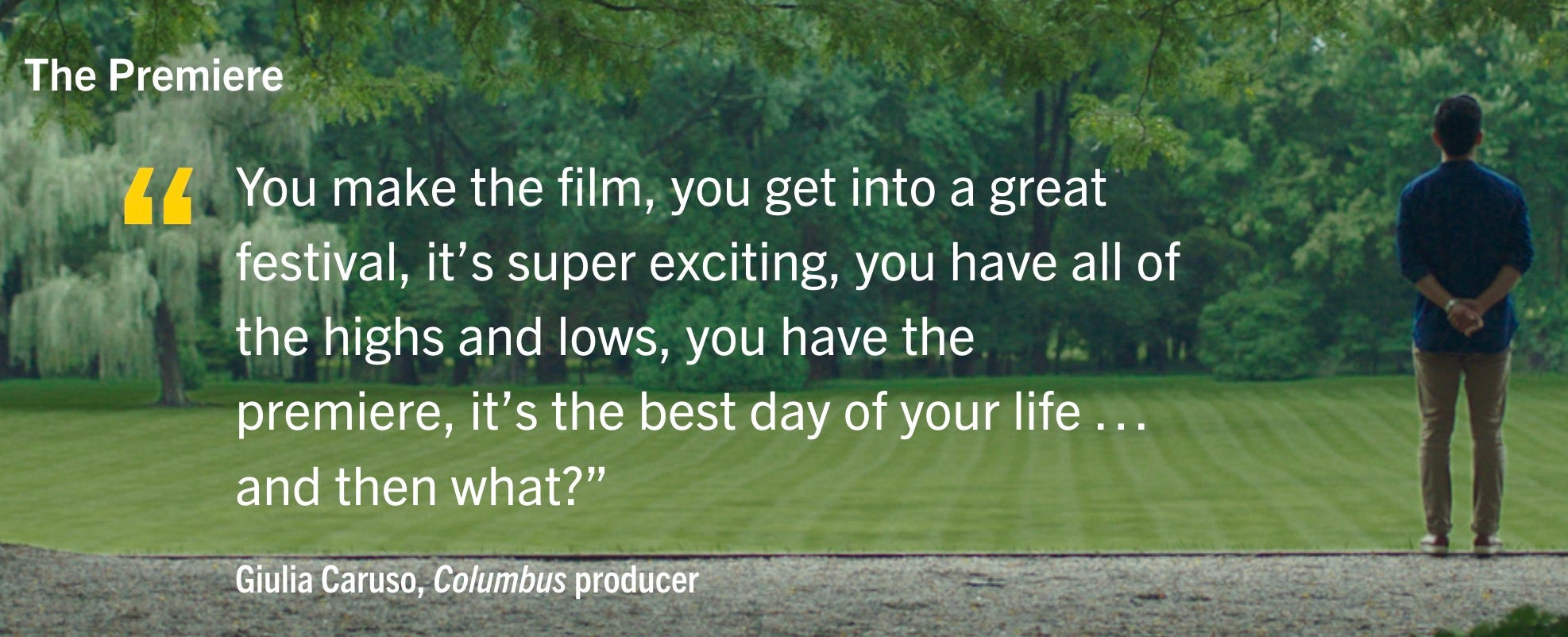
Film festivals are extraordinary engines of attention.
They anoint films.
They concentrate audiences.
They create cultural moments where none existed before.
At their best, they are unmatched in their ability to signal which films deserve attention from buyers, critics, and audiences, and to shape how those films are valued.
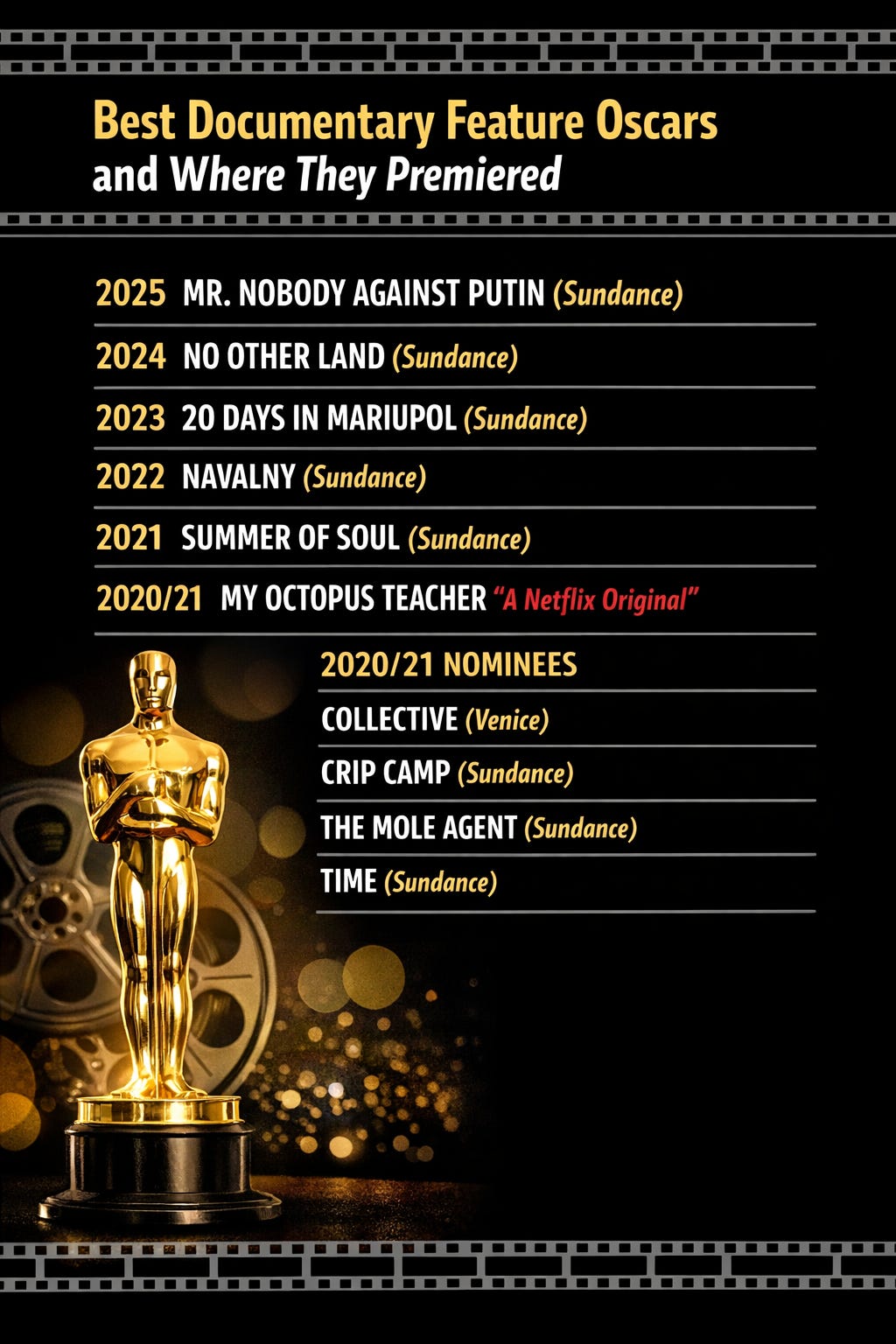
In the documentary category this year, every Oscar-nominated film emerged from the Sundance ecosystem, and across the broader awards landscape, the 2020s for docs have been anchored in festival premieres.
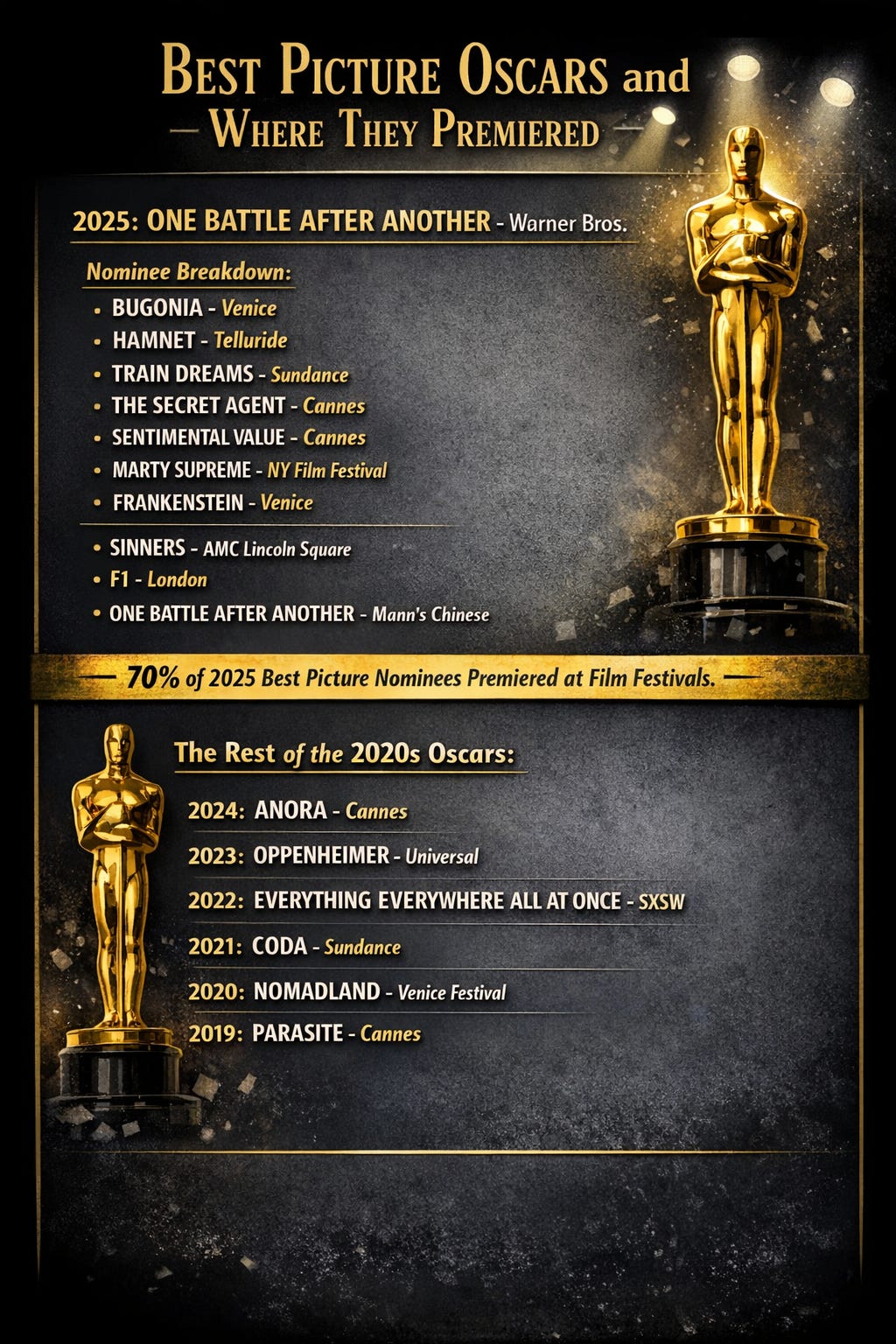
Recent Best Picture winners including ANORA (Cannes), EVERYTHING, EVERYWHERE, ALL AT ONCE (SXSW), CODA (Sundance), NOMADLAND (Venice), and PARASITE (Cannes) all began their runs on the festival circuit.
If anything, the influence of the major festivals has only grown —
becoming increasingly central to how a particular cohort of films are valued, acquired, and ultimately positioned in the marketplace.
Two Masters
Major festivals serve two masters.
They curate culture.
They facilitate sales.
Within that structure, films follow one of two paths.
They arrive with distribution already in place.
Or they enter the market in search of a sale.
For the films that do sell, the path is clear.
But clarity comes at a cost.
In order to access that system, rights holders are typically required to surrender control — often entirely — over pricing, positioning, audience data, and the long tail of their film’s value.
It is, in many ways, a Faustian bargain: the possibility of scale and career-defining visibility in exchange for ownership, often creating a quiet tension between the filmmaker’s long-term ambitions and the investor’s economic interests.
But they are also the exception.
For the films that do not sell — virtually all of them — the path forward remains uncertain, extending beyond the festival circuit without a clear mechanism for reaching audiences.
Even for most of the films that are acquired out of a festival, the moment of premiere is under-leveraged. Deals take time. Campaigns take time. Releases are scheduled months later. The energy generated at the festival — press, discovery, word of mouth — begins to dissipate almost immediately.
Studios operate differently. When a studio premieres a film at Cannes, for instance, it is part of a coordinated release strategy. Awareness is generated at a global level and quickly converted into box office through a tightly timed theatrical rollout.
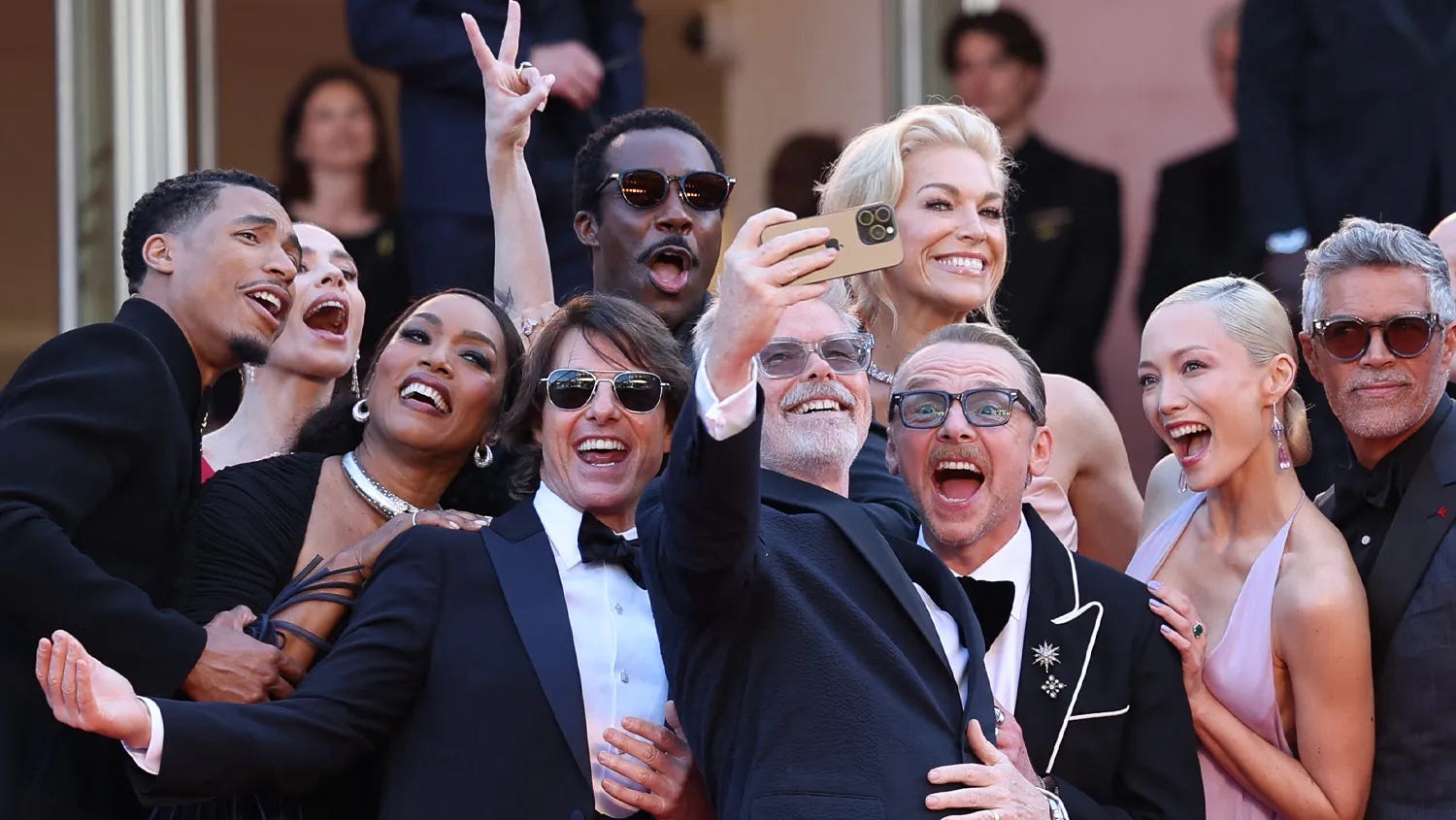
Independent films rarely have that luxury.
That led me to a question I put to a festival director:
If festivals are so effective at creating value at the moment of premiere, why does their role effectively end there — at the very moment they’ve created the most value — and why not extend that role into generating demand?
After the Premiere
For decades, the assumption has been that once a film premieres, the market takes over.
But despite film festivals’ outsized influence on taste-making, awareness alone rarely transacts.
There must be a demand signal as well.
Most films leave a festival in an increasingly precarious position:
validated, but unreleased
discovered, but unseen
celebrated, but unmonetized
And yet, at the moment a film premieres, something uniquely valuable has been created.
Intention.
Press coverage.
Word of mouth.
Early audience interest, however unformed.
Momentum.
This is when a film is most alive in culture — when attention is concentrated, narratives are forming, and audiences are primed to engage.
That momentum behaves differently depending on the path a film takes.
For studio and mini-major releases, it is captured and converted almost immediately.
For films that sell, it is stretched over time, reshaped into a longer campaign often months removed from the initial moment of discovery.
For the majority of films, it is lost altogether.
The gap is not one of awareness, but of conversion.
Festivals create the signal.
The system struggles to carry it forward.
What would it look like if festivals reframed their role from not only fostering exits (sales), but to facilitating releases (service distribution) — and aligned their resources around making that real?
If the same forces that concentrate attention could be extended to convert it?
If a festival didn’t just premiere a film, but helped release it —
Extending the Moment
Film festivals already do the hardest part of introducing a film to the market.
They select the film.
They frame it.
They introduce it to the world.
They create the conditions under which a film can matter.
What follows is typically handed off.
To a distributor.
To a sales agent.
To a process that begins again from scratch — rebuilding awareness, reintroducing the film, attempting to recreate the very momentum the festival just generated.
But there is no structural reason that handoff needs to be absolute.
The capabilities required to extend that moment are not fundamentally different from those already in place.
From the moment a film is selected to the moment it premieres, the groundwork for release can already be underway.
Creative assets can be developed.
Trailers and key art can be designed.
Theatrical bookings can be secured.
Long-lead press can be placed.
Field marketing can be scheduled.
All in parallel with the film’s impending festival debut.
Audience signals can be captured at the festival through ticketing and first-party data, allowing early demand to be measured, aggregated, and acted upon.
The same curatorial authority that elevates a film can be used to guide its release.
The clearest way to do that is through service distribution, as a direct extension of the festival’s mission.
The infrastructure already exists.
The capital already exists.
The expertise already exists.
What has been missing is alignment.
The model is surprisingly straightforward.
Festivals act as service distributors for a defined window.
They run the theatrical release.
They deploy marketing capital with discipline and intent.
They capture audience data at the point of transaction.
And when that phase is complete, the rights remain with the filmmakers.
There is no commission on the long tail.
No permanent transfer of control.
The festival participates in creating value, not extracting it.
That capital can be structured as a grant or as a loan.
Either way, the outcome is the same.
The film reaches an audience.
Its value is increased.
Its risk is reduced.
And any subsequent distributor engages with a project that has already demonstrated demand, not one that is still searching for it.
The Model That Almost Worked
This is not an entirely new idea.
A version of it has already been tested.
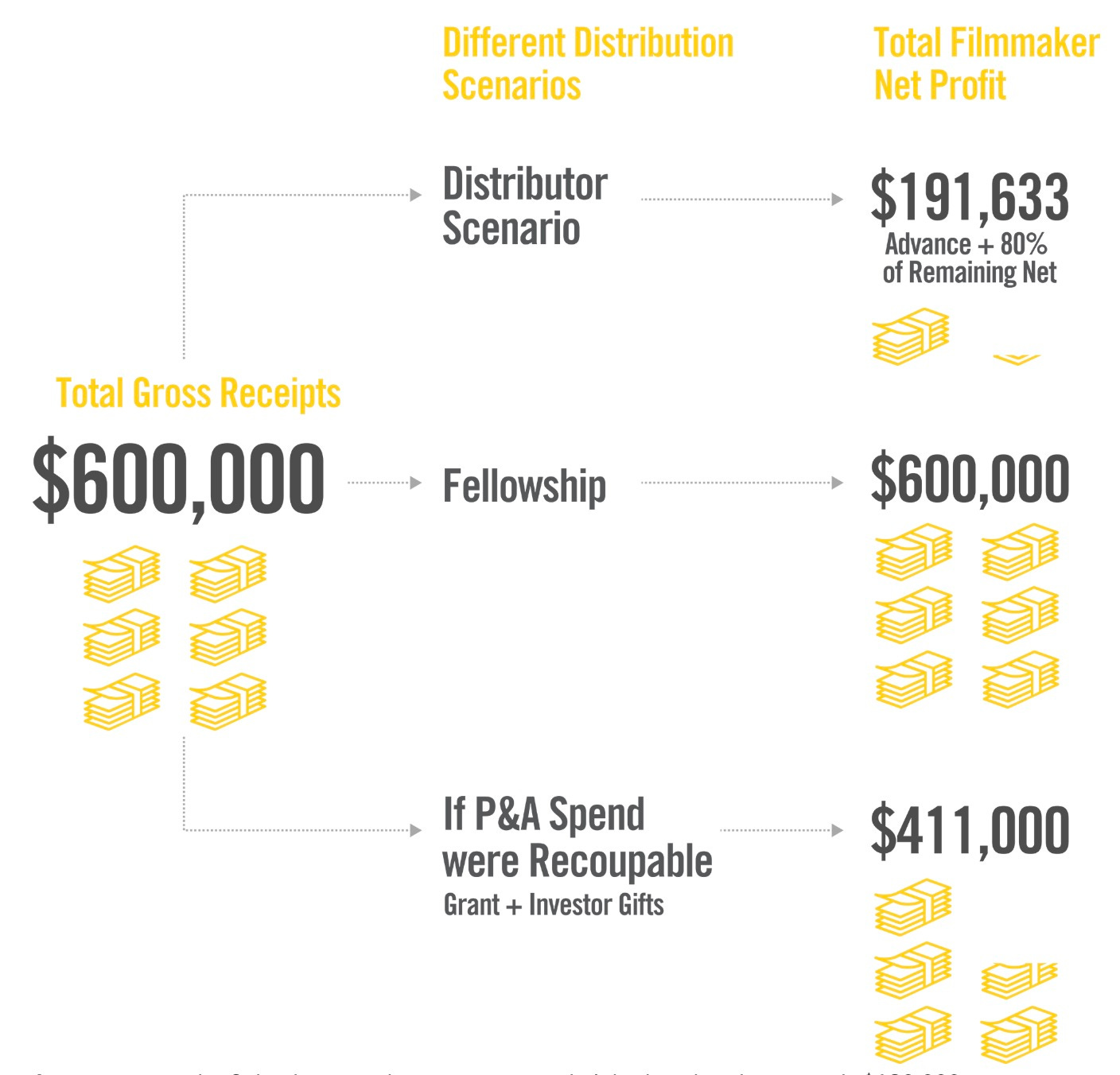
Sundance Artist Services’ Creative Distribution Fellowship, led by Liz Manashil, Chris Horton and Jess Fuselier, was launched in 2017 to help filmmakers navigate distribution, marketing, and audience engagement — an early institutional effort to support filmmaker-led releases and build viable alternatives to traditional distribution. It pointed in the right direction.
It provided capital.
It provided guidance.
It created a framework for films to go to market outside of conventional deals.
But it stopped just short of execution.
The capital was wired to filmmakers, who were then expected to manage their own release — coordinating publicity, marketing, bookings, and strategy in parallel with everything else required to sustain a career.
For a small number of teams, this worked.
For most, it did not.
Releasing a film is a full-time job. Most filmmakers are already working one.
For those who were already financially and operationally stretched, the model asked them to take on an additional role at precisely the moment when the stakes were highest.
The lesson is that the burden was misplaced.
Instead of wiring grants to filmmakers and asking them to navigate release on their own, festivals can deploy that same capital directly into the market — controlling spend, executing strategy, and carrying the film through its first phase of release.
The burden shifts.
From the film team — who are rarely resourced to run a full campaign —
to the institution that created the moment in the first place.
The core insight remains intact.
Films benefit from retaining control.
They benefit from reaching audiences directly.
They benefit from building value before entering the broader market.
What changes is who is responsible for making that happen.
In that shift, the model becomes not only viable, but scalable.
What This Unlocks
When festivals extend their role into release, the implications are immediate.
Films reach audiences earlier, while momentum is still intact.
Audience data is captured at the point of engagement, creating a direct relationship between the film and the people it reaches.
That information remains with the rights holders and informs what happens next.
The economics begin to shift as well.
Early revenue flows directly to the film.
Marketing spend is informed by real-time feedback.
Risk is reduced before a broader release is even contemplated.
For filmmakers, this creates a different kind of leverage.
Partnering with a distributor becomes a choice, not a necessity.
Terms are negotiated against demonstrated demand.
For investors, the picture becomes clearer.
Value is built and measured in real time.
The tension between career ambition and economic return begins to resolve through alignment.
A film builds a cultural presence and a commercial foundation simultaneously.
The timing is notable.
With David Linde stepping in to lead Sundance, there is a clear example of an alignment between mission and market execution.
At Participant, he built a model that treated impact and revenue as reinforcing outcomes — pairing storytelling with the capital and discipline required to reach audiences at scale.
That same mindset applied to the festival ecosystem points to a different path: one where the resources already flowing through these institutions are directed not only toward creation, but toward reaching audiences.
The infrastructure exists. The capital exists. The moment exists.
Festivals are uniquely positioned to make this possible.
They identify the work.
They shape its meaning.
They concentrate attention at a scale no other institution can replicate.
Extending that role by a matter of weeks completes the cycle.
And in doing so, begins to reshape how films reach audiences altogether.
It shifts control of the earliest and most important moment of a film’s life.
Sundance created their app for this reason, but then couldn’t make the model work.
As a tv writer/showrunner trying to navigate distribution with my indie film right now, I appreciate the post for a bunch of reasons, not least that you pointed out distribution is a full-time job. I have two currently not-great offers from distributors in hand, and it is tempting just to sign so I don’t have to do that work.
This is an interesting thought…
It would be interesting if this concept could be supplemented as a short animation or infographic.
An initial challenge may be that this would cut into the profits of the festival because they would be revenue sharing with the filmmakers.
Which is why this model may work better if we were able to launch a NonDe filmmaker cooperative festival circuit, owned and operated by the filmmakers.
Of course the challenge there is establishing a trusted experience or curated pathway.